

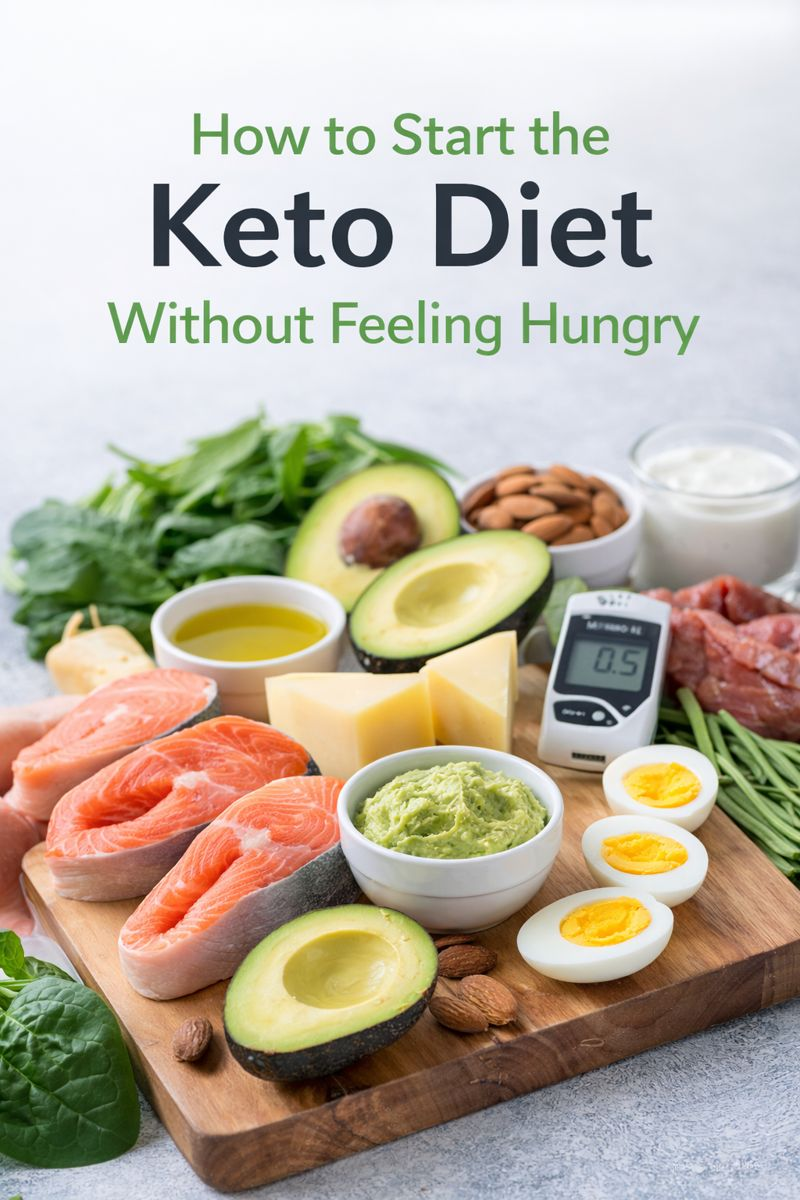
How to Start the Keto Diet Without Feeling Hungry
Keto doesn’t have to feel restrictive. When meals are structured properly, hunger settles, cravings ease, and the process becomes far more sustainable than people expect.
Starting the keto diet doesn’t have to mean constant hunger. Many beginners feel frustrated because cravings show up, energy dips, and meals suddenly feel unsatisfying — but that usually happens because the transition is rushed. When the body is guided gently, it’s absolutely possible to start the keto diet without feeling hungry while still moving toward fat loss.
Most of that isn’t about willpower. It’s simply the body being rushed into a new eating style without enough structure, nutrients, or time to adapt. The aim of keto isn’t to “eat as little as possible.” The aim is to help the body shift from depending on sugar to comfortably using fat — without feeling deprived.
Why hunger appears when starting the keto diet
When carbohydrate intake drops, the body temporarily loses its fastest fuel source. Until it builds the ability to use fat and ketones efficiently, signals of hunger can feel louder than usual. Add lack of hydration or uneven meals on top of that, and the body responds with cravings, headaches, irritability, or constant thoughts about food.
Hunger at the start of keto rarely means “keto isn’t working.” It usually means the transition needs to be slower and more nourishing.
If cravings feel especially strong, they’re often connected to how sugar affects appetite. Our guide on Sugar Consumption and Its Role in Weight Gain explains why cravings appear — and how to calm them without feeling deprived.
Keto, explained simply
The ketogenic approach lowers carbohydrates, keeps protein steady, and uses healthy fats to maintain fullness. This naturally encourages the body to draw from stored fat instead of relying only on glucose. When meals are built thoughtfully, most people notice appetite loss happening on its own instead of being forced.
Step 1 — Prepare Before Starting
Success with keto doesn’t begin on the first official “keto day.” It begins in the kitchen a week earlier — removing sugary snacks, sweetened beverages, and highly refined instant foods, while stocking the fridge with vegetables, eggs, paneer, tofu, chicken, fish, nuts, seeds, and healthy oils. Having nourishing choices within reach instantly reduces panic-eating and late-night slip-ups.
Step 2 — Build Fuller Plates, not Smaller Ones
A satisfying keto meal is rarely tiny. It usually contains a firm source of protein, generous vegetables, and enough fat to truly feel complete. An omelette with vegetables and avocado, a bowl of paneer or chicken tossed with olive oil and crunchy salad greens, or a simple tofu curry paired with cauliflower rice are perfect examples. The goal isn’t guilt — it’s steadiness.
Step 3 — Understand Cravings instead of Fighting them
Not every craving is genuine hunger. Sometimes it is habit, boredom, stress, or simply dehydration. Taking a pause, drinking water, and waiting a few minutes often settles the urge on its own. If the hunger remains after that, choosing real food — not a “keto dessert” — keeps the appetite more stable the next day.
Step 4 — Hydrate more than you Think
Keto naturally leads to greater water loss. When fluids and electrolytes drop, the brain can misinterpret the signal as hunger. Drinking consistently through the day, occasionally adding lemon water or broth, helps prevent headaches, fatigue, and those confusing false hunger waves.
Step 5 — Transition Gradually
A slower entry into keto is often far easier on both the mind and metabolism. One week reducing sugary drinks, another lightening portions of bread and rice, and only then moving into full keto intake allows the body to adjust quietly, without the dramatic “crash” so many people associate with ketogenic diets.
Research consistently shows that gradual dietary changes improve long-term adherence and reduce side effects. For anyone curious about the background science, this Evidence-Based Overview of the Ketogenic Diet offers a clear explanation without promoting extreme behaviors.
A simple, balanced keto-day example
Breakfast might look like scrambled eggs cooked gently in olive oil with spinach on the side. Lunch could be a generous stir-fry of paneer and mixed vegetables. If hunger appears mid-day, unsweetened Greek yogurt with a few nuts can bridge the gap. Dinner may be chicken or tofu simmered in spices, served with cauliflower rice and sautéed greens. Nothing extreme — simply structured.
When professional guidance matters
People managing diabetes, thyroid issues, kidney conditions, pregnancy, or past eating-disorder history should always approach keto with individual supervision. The right version of nutrition is the one that protects long-term health, not only short-term results.
Key takeaway
Keto was never designed to feel like starvation. When meals prioritize protein, fiber-rich vegetables, supportive fats, hydration, and a gradual transition, the body learns to burn fat more comfortably — and hunger softens instead of growing louder. Fitwiser encourages approaches that respect metabolism, lifestyle, and emotional health, rather than forcing strict rules.
Frequently asked questions
Does keto always cause early fatigue?
Temporary fatigue often appears only when electrolytes, calories, or hydration are too low. With supportive meal structure, most people regain steady energy quickly.
Can I exercise while adapting to keto?
Gentle walking and light strength training are usually ideal while transitioning. Intensity can gradually increase as fat-adaptation improves.
How long does it take to stop feeling hungry?
For many people, appetite becomes noticeably calmer between two and three weeks. Consistency, hydration, and adequate protein make the biggest difference.