

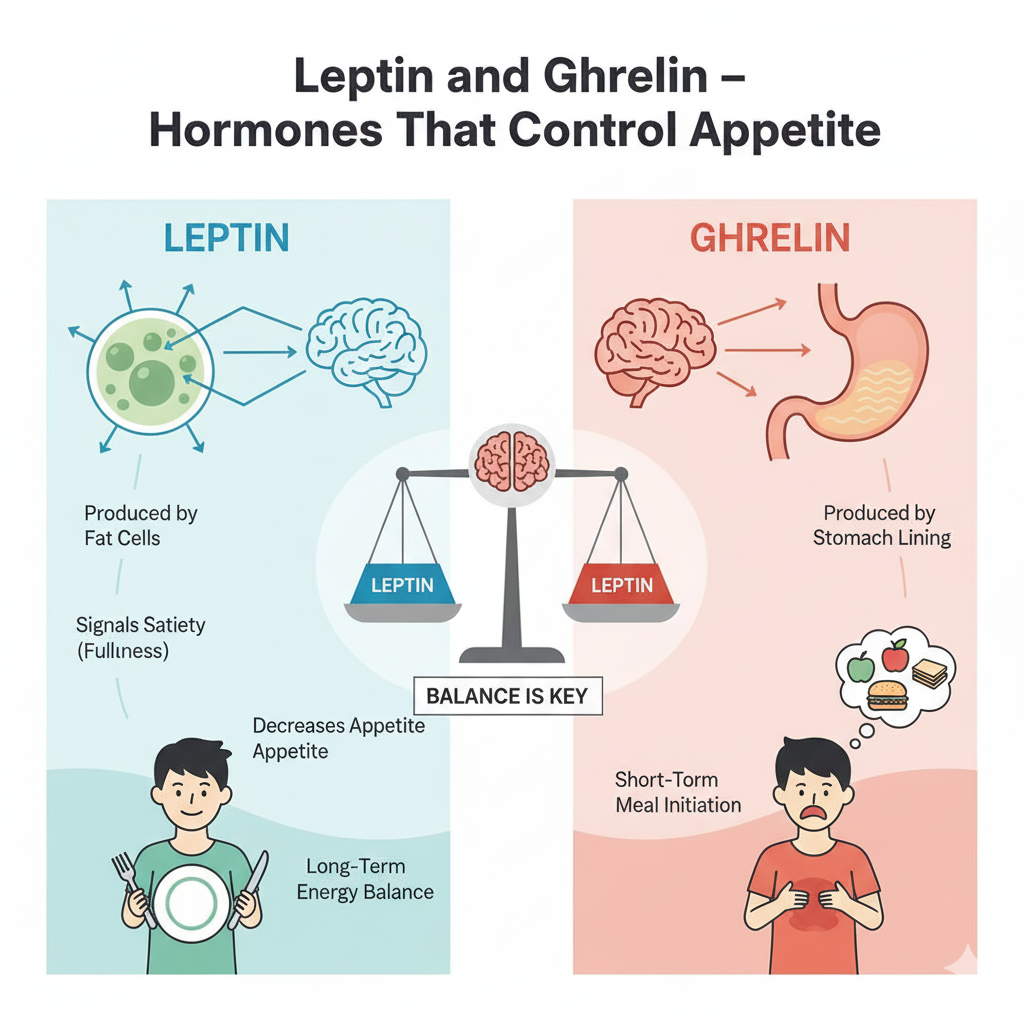
Understanding Leptin and Ghrelin
Appetite regulation is one of the most crucial factors in maintaining a healthy weight. Two hormones, leptin and ghrelin, play a central role in signaling hunger and satiety to the brain. Understanding how these hormones work can provide insight into why some people struggle with overeating or weight management, and how lifestyle interventions can support balance.
What Are Leptin and Ghrelin?
Leptin and ghrelin are often referred to as the “hunger hormones,” but their roles are opposite:
- Leptin: Known as the “satiety hormone,” leptin signals to the brain when you have enough energy stored in fat cells, helping you feel full and reducing food intake.
- Ghrelin: Known as the “hunger hormone,” ghrelin stimulates appetite, signaling the brain to eat when energy is low.
The balance between these two hormones regulates overall energy intake, influences metabolism, and affects weight management over time.
How Leptin Works
Leptin is produced primarily by fat cells (adipocytes) and circulates in the blood to communicate with the hypothalamus, a region of the brain responsible for energy regulation. When fat stores are sufficient, leptin levels rise, signaling satiety and reducing appetite. Leptin also increases energy expenditure by stimulating metabolic processes.
Leptin Resistance
In some individuals, despite high leptin levels, the brain does not receive the “stop eating” signal effectively. This is called leptin resistance. It is commonly observed in overweight and obese individuals and contributes to overeating and difficulty in losing weight.
- Chronic overconsumption of calorie-dense foods can desensitize leptin receptors.
- Inflammation and poor sleep can exacerbate leptin resistance.
- High stress levels and elevated cortisol may interfere with leptin signaling.
How Ghrelin Works
Ghrelin is produced mainly in the stomach and signals hunger to the brain. Levels rise before meals, prompting eating, and decrease after food intake. Ghrelin not only stimulates appetite but also influences fat storage and energy homeostasis.
Factors That Increase Ghrelin
- Fasting or long periods without food
- Sleep deprivation
- High stress and certain hormonal imbalances
Factors That Decrease Ghrelin
- Consuming balanced meals with sufficient protein and fiber
- Regular sleep and rest
- Consistent eating patterns
Leptin and Ghrelin Interplay in Weight Management
The interaction between leptin and ghrelin determines hunger cues, satiety, and calorie intake. When this balance is disrupted, appetite regulation fails, leading to overconsumption and potential weight gain.
For example, sleep deprivation increases ghrelin and decreases leptin, causing increased hunger and cravings, particularly for high-calorie foods. Chronic stress can similarly dysregulate both hormones, contributing to weight challenges.
Lifestyle Strategies to Support Hormonal Balance
Balancing leptin and ghrelin is not about following fad diets or taking supplements; it involves consistent lifestyle habits that support hormonal function.
1. Prioritize Quality Sleep
Studies show that inadequate sleep reduces leptin levels and elevates ghrelin, increasing hunger and appetite. Aiming for 7–9 hours of restful sleep daily supports optimal hormone regulation.
2. Maintain Consistent Meal Patterns
Eating balanced meals at regular intervals helps stabilize ghrelin fluctuations and enhances leptin sensitivity. Including protein, fiber, and healthy fats in meals improves satiety and reduces excessive snacking.
3. Manage Stress Effectively
High stress triggers cortisol release, which can interfere with leptin signaling and increase ghrelin production. Practices such as mindfulness, meditation, yoga, and physical activity help mitigate stress and support appetite regulation.
4. Stay Hydrated
Proper hydration supports metabolic processes and may help regulate hunger. Sometimes, mild dehydration can mimic hunger signals, potentially increasing ghrelin-driven food intake.
5. Include Physical Activity
Exercise not only burns calories but also improves leptin sensitivity. Regular activity supports fat metabolism, enhances energy expenditure, and reduces excess fat storage, indirectly influencing hormonal balance.
Hormones and Emotional Eating
When leptin and ghrelin signals are out of sync, emotional eating can intensify. Stress, boredom, or social triggers may prompt overeating, even if energy needs are met. Addressing hormonal imbalances through lifestyle interventions can reduce the urge to eat for reasons other than hunger.
Fitwiser Approach to Hormonal Balance
Fitwiser focuses on tracking daily habits that influence leptin and ghrelin, including:
- Sleep patterns and duration
- Meal timings and macronutrient balance
- Physical activity and step counts
- Hydration levels throughout the day
By providing insights into these lifestyle factors, users can understand patterns affecting appetite, energy, and metabolism, and make informed adjustments to support weight management.
Conclusion
Leptin and ghrelin are central to regulating hunger, satiety, and energy balance. Disruptions in their signaling can lead to overeating, cravings, and weight gain. While genetic factors play a role, lifestyle habits — including sleep, stress management, hydration, meal patterns, and physical activity — are powerful tools to restore balance and promote healthy weight management.
Understanding these hormones empowers individuals to make conscious choices that support appetite regulation, metabolic efficiency, and overall well-being.